Showing posts with label sustainability. Show all posts

Thursday, July 7, 2011

Response to Statement by the Biodegradable Products Institute about the biodegradability paper.

S
Source


I found a statement by Steven A. Mojo, Executive Director of the Biodegradable Products Institute (BPI) about the paper that I co-wrote with my advisor Dr. Morton Barlaz entitled Is Biodegradability a Desirable Attribute for Discarded Solid Waste? Perspectives from a National Landfill Greenhouse Gas Inventory Model that is patently false:
First, the author, James Lewis,[sic] leads the reader to believe that since a biobased material will quickly biodegrade under aerobic conditions, such as composting, that it will also do so under the anaerobic conditions found in landfills. 
Firstly, all publicity is good publicity IF they spell your name right. Secondly, this statement is not at all based in fact. Our results for the methane generation from PHBO were based on anaerobic reactor studies of PHBO published in Biomacromolecules in 2002 (Federle et al, 2002). We spend 400 words describing exactly how this was done in the section of the paper entitled Modeling of Individual Waste Components. Claiming that we used aerobic composting decomposition data or results to model anaerobic degradation in a landfill is completely false and clearly contradicted by the actual paper in question. I really hope that someone at BPI reads this and corrects the statement. 
His only other argument is that biodegradable plastics are a minuscule part of the waste stream, so their emissions aren't important. I rebutted that argument in my previous post:
Firstly, our calculations were performed on a per mass basis, which means we calculated the amount of greenhouse gas emissions per ton of waste discarded in a landfill. Therefore, it makes no difference that other waste materials are landfilled in greater amounts. Secondly, it's irrelevant from a planning perspective because we can't substitute biodegradable plastics for food waste or yard waste or paper, which constitute traditional biodegradable materials. The fact that some of those materials may emit more methane (which we quantify and discuss in the paper), is completely irrelevant since those materials perform completely different functions. People can't substitute food for bioplastics, so it doesn't matter from a decision standpoint that food waste may lead to more emissions.
---
Cited Literature

  1. Levis, J. W., Barlaz, M. A. “Is Biodegradability a Desirable Attribute for Discarded Solid Waste? Perspectives from a National Landfill Greenhouse Gas Inventory Model” Environ Sci Technol, 2011, doi: 10.1021/es200721s
  2. Federle, T. W.; Barlaz, M. A.; Pettigrew, C. A.; Kerr, K. M.; Kemper, J. J.; Nuck, B. A.; Schechtman, L. A. Anaerobic biodegradation of aliphatic polyesters: Poly(3-hydroxybutyrate-co-3-hydroxyoctanoate) and poly(epsilon-caprolactone). Biomacromolecules 2002, 3, 813–822.

Wednesday, June 29, 2011

Response to criticism of biodegradability paper


Waste & Recycling News has a new post up criticizing the paper that I co-wrote with my advisor Dr. Morton Barlaz entitled Is Biodegradability a Desirable Attribute for Discarded Solid Waste? Perspectives from a National Landfill Greenhouse Gas Inventory Model. The criticisms are from the Berlin-based European Bioplastics BV. Their main criticism is that the conclusions reached in the study are too broad. I would argue that they interpreted the results of the study too broadly, and that their criticisms are not aimed at things actually said in the study. They start by saying:
There are bio-based, non-biodegradable bioplastics -- such as bio-based versions of PET and polyethylene -- that do not produce methane because they are not biodegradable, explained the association. They, however, constitute a significant proportion of the current bioplastics production.
Firstly, it should go without saying that “non-biodegradable plastics” are not biodegradable, and therefore not being referenced in the title of the manuscript. Secondly, our study's only mention of bio-based non-biodegradable products was to say that they would lead to the least greenhouse gas emissions in a landfill.

From the paper:
These results suggest that for a national average landfill, in which not all gas is collected and converted to energy, optimal performance would be achieved for biogenic materials that are recalcitrant under anaerobic conditions.
So, these materials are out of the scope of the question asked in the title of paper, and we still addressed the fact that they are preferable from a greenhouse gas emission standpoint. Perhaps, instead of criticizing our work they should be highlighting the fact that we have shown the benefits of bio-based, non-biodegradable plastics which "constitute a significant proportion of the current bioplastics production".

Their second point is similiar:
In addition, biodegradable and bio-based materials do not all behave the same way under landfill conditions.... In sanitary landfill the moisture level is low and not conducive for biodegradation as shown by some studies.
Once again we have a problem of definitions. The U.S. FTC states that claims of "biodegradable or photodegradable should be substantiated by competent and reliable scientific evidence that the entire product or package will completely break down and return to nature, i.e., decompose into elements found in nature within a reasonably short period of time after customary disposal". I do not see how a compelling case can be made that a material that is in a landfill is "not conducive for biodegradation" degrades "within a reasonably short period of time after customary disposal". Landfills may not be considered customary disposal of these materials in Europe, but that is certainly not the case in the U.S.

Finally, they also say that we did not consider "the fact that, compared with other waste going to landfills and potentially emitting methane, bioplastics only enter landfill in very low amounts" which is totally irrelevant for a couple of reasons. Firstly, our calculations were performed on a per mass basis, which means we calculated the amount of greenhouse gas emissions per ton of waste discarded in a landfill. Therefore, it makes no difference that other waste materials are landfilled in greater amounts. Secondly, it's irrelevant from a planning perspective because we can't substitute biodegradable plastics for food waste or yard waste or paper, which constitute traditional biodegradable materials. The fact that some of those materials may emit more methane (which we quantify and discuss in the paper), is completely irrelevant since those materials perform completely different functions. People can't substitute food for bioplastics, so it doesn't matter from a decision standpoint that food waste may lead to more emissions. In the end, the first step to rectifying both problems is aggressive landfill gas collection as was stated in my first post on the subject.

---
Cited Literature

  1. Levis, J. W., Barlaz, M. A. “Is Biodegradability a Desirable Attribute for Discarded Solid Waste? Perspectives from a National Landfill Greenhouse Gas Inventory Model” Environ Sci Technol, 2011, doi: 10.1021/es200721s

Tuesday, June 7, 2011

Is biodegradability a beneficial attribute for discarded solid waste?


A paper that I co-wrote with my advisor Dr. Morton Barlaz entitled "Is Biodegradability a Desirable Attribute for Discarded Solid Waste? Perspectives from a National Landfill Greenhouse Gas Inventory Model" has been making the news lately. The official press release can be found here. From what I've seen, a variety of people have taken the results to support a number of pre-conceived notions. But, I'll address that in a future post. I want this post to focus on what was done and what the results show.

Greenhouse gas flows in a landfill.

The foundation of this study is a life-cycle assessment (LCA) of the greenhouse gas (GHG) emissions from discarding waste in both national average landfills and state-of-the-art landfills. A state-of-the-are landfill is one where the landfill collects the generated methane and beneficially uses it. This LCA consisted of adding up all of the GHG emissions associated with every step of landfilling. The fundamental equation for determining the total GHG emissions from landfilling is shown below and is essentially a restatement of the image above (Sorry the equation is in picture form. I need to learn how to do equations in html.).


The units in each term of the equation are kg. Fossil fuels are used in the construction, operations, final cover, leachate management, and long term monitoring phases. These only amount to about 7 kg CO2 equivalents* (CO2e), though and aren't very important when compared to the other terms.

Source EPA
Fugitive methane is very important and pretty interesting from a modeling standpoint. But, I want to cover landfill gas modeling in a separate post. Basically, different materials decay at different rates, and landfills that collect gas tend to increase their collection efficiency over time. Collected methane is assumed to be destroyed with near 100% efficiency. It is also assumed that 10% of the methane passing through the soil will be oxidized to CO2, which is similar to combusting it, but is done by aerobic microbes. This 10% level is pretty conservative though, other studies have put the number at anywhere between 20-50% (Chanton et al., 2011). So, the methane that isn't collected or oxidized is emitted to the atmosphere.

The next major component is the electricity offsets. The EPA estimates that 69% of waste is in landfills that collect methane. About half of this waste is in landfills that beneficially use the methane. The others just flare the methane, which converts it to CO2. For this study we assumed all of the beneficially used methane was used for electricity generation. The electricity offsets are then due to the avoided emissions from the electricity that subsequently was not produced at either coal or natural gas plants. We only considered coal and natural gas because they are the two sources that can cost effectively adjust to changes in electricity demand. The marginal costs of nuclear and hydro are just too low for it to make any sense to reduce their output due to the availability of another source. So, we then assumed that our offset electricity was composed of 72% coal and 28% natural gas because this represents the adjusted national split. This leads to an offset of 1.02 kg CO2e per kWh.

The final component is the landfill carbon balance is carbon storage. Typical materials in solid waste do not fully degrade under anaerobic conditions (i.e. without oxygen). Since most of the typical materials that degrade at all are biogenic (i.e. plant or animal based) the carbon in those materials was recently removed from the atmosphere as plants were growing (e.g., trees for paper and food crops). This carbon is then considered sequestered in the landfill and will remain there as long as the landfill is undisturbed. On geological time scales this material could form peat or perhaps lignite. The amount of carbon stored for each material was measured based on previous laboratory studies (Staley and Barlaz, 2009; Federle et al., 2002).

So, what happens when you put all of these components together? The main results are shown in Figure 1 of the paper (reproduced below with modifications).
Greenhouse gas emissions from materials disposed in national average and state-of-the-art landfills. (Units and colors have changed for readability).
As I stated above, a state-of-the-art landfill is one where gas is collected and beneficially used. What these results really show that has been ignored by a lot of the articles that have reported on this study is that there are huge benefits to be had from collecting and beneficially using landfill gas. Disposing of mixed MSW in a state-of-the-art landfill  is actually carbon negative, but it is currently slightly positive using our current national average landfill infrastructure. Actually, all of the materials except for food waste have negative carbon emissions in a state-of-the-art landfill. This is fairly low hanging fruit for greenhouse gas mitigation efforts. So, when reporters have asked what consumers should do, the first thing that comes to mind is to ensure that their local landfill collects the generated methane and beneficially uses it if at all possible.

The main result that has been reported is an analysis of the effects of decay rate on greenhouse gas emissions in a national average landfill. Essentially, we exercised the model with 4 different theoretical biodegradable materials, and plotted the greenhouse gas emissions from disposing of those materials in a national average landfill as we vary the decay rate (i.e., how quickly the material releases its methane). The results of this analysis are shown below.
Greenhouse gas emissions from hypothetical biodegradable materials versus decay rate.  (Units and colors have changed for readability).
It is the results in this figure that have been widely reported for two reasons. Firstly, it shows that the more degradable a material is, the greater the CO2 emissions are from it. Basically, this means that degrading and generating methane is worse than just storing the carbon in the landfill. It also shows that a slower decay rate also leads to decreased greenhouse gas emissions. The best material is the one that does not degrade at all. It should be pointed out that this is for a national average landfill. The results would be somewhat different for a state-of-the-art landfill, but it can be easily shown that degradation of a carbohydrate or any degradable material with a hydrogen:oxygen atom ratio of 2:1 always leads to increased greenhouse gas emissions versus its non-degradable counterpart with standard electricity conversion efficiencies. Essentially, even with 100% gas collection the electricity offset is not large enough to offset the carbon storage.

It is this analysis that has led to headlines about biodegradable materials being bad for the environment. I would say it shows that there are negative global warming impacts associated with disposing of  biodegradable materials in landfills. One would need to study the entire life-cycle of the material to know if it was better or worse than the alternatives. One should also look at other environmental factors (i.e., resource conservation, biodiversity impacts, etc.) before making a final judgement. What this study does suggest is that the best first step is to ensure we are aggressively collecting methane from landfills. Increasing composting infrastructure could also be beneficial, and the development of non-degradable materials from biogenic sources may also be beneficial and worth further study. In the end, one must always take a systemic approach to analyzing complex problems.

---
*kg CO2e = 1 x kg fossil CO2 + 25 x kg methane - (44/12) kg C stored

---
Cited Literature

  1. Levis, J. W., Barlaz, M. A. “Is Biodegradability a Desirable Attribute for Discarded Solid Waste? Perspectives from a National Landfill Greenhouse Gas Inventory Model” Environ Sci Technol, 2011, doi: 10.1021/es200721s
  2. Chanton, J.; Abichou, T.; Langford, C.; Spokas, K.; Hater, G.; Goldsmith, D.; Barlaz, M. A. Observations on the methane oxidation capacity of landfill soils. Waste Manage. 2011, 31, 914 925.
  3. Staley, B. F.; Barlaz, M. A. Composition of municipal solid waste in the united states and implications for carbon sequestration and methane yield. J. Environ. Eng. -ASCE 2009, 135, 901–909.
  4. Federle, T. W.; Barlaz, M. A.; Pettigrew, C. A.; Kerr, K. M.; Kemper, J. J.; Nuck, B. A.; Schechtman, L. A. Anaerobic biodegradation of aliphatic polyesters: Poly(3-hydroxybutyrate-co-3-hydroxyoctanoate) and poly(epsilon-caprolactone). Biomacromolecules 2002, 3, 813–822.

Saturday, April 2, 2011

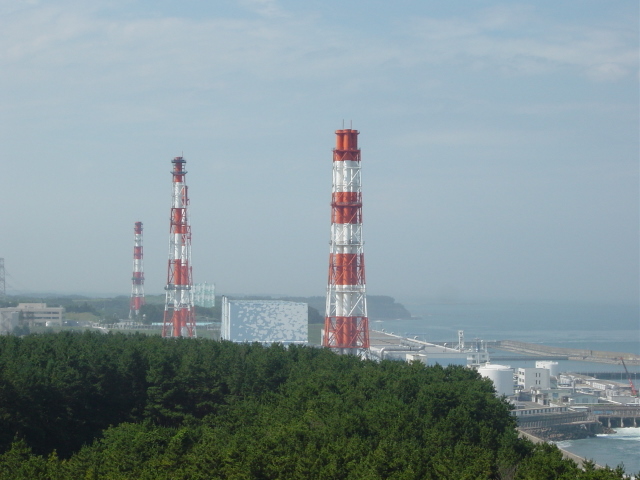
Discussion of the safety, risks, and future of nuclear power

Fukushima-1
The The Sydney Morning Herald ran an editorial piece looking at the opinions of four experts on the safety, risks, and future of nuclear power. The whole piece is definitely worth a read, but I just wanted to go through some of the main points made and give my own opinion as well.

The first expert is Ben Heard, who is the director of ThinkClimate Consulting. I think he most mirrors my own thinking, saying
Rationally, we should all fear climate change. It threatens our occupation of this planet within a century. This, rather than nuclear power, is what keeps me awake at night.

The biggest contributor to climate change is coal. Renewables alone cannot displace coal quickly enough. But nuclear power plus renewables can, with minuscule risk. The only rational response is to be open to the further deployment of nuclear power, in partnership with growth in renewables.

The second commenter is Ian Lowe, who is president of the Australian Conservation Foundation. He agrees that climate change is a huge concern, but thinks the nuclear just isn't worth the risk.
By contrast, we do not have to worry about terrorists stealing wind turbine blades or earthquakes shattering solar panels. It is quite rational to see nuclear energy as a high-risk approach.
Things may be different in Australia, but I disagree with this because the real comparison is between nuclear and coal. Nuclear and coal both provide baseload power, and a shift away from nuclear, especially in this political climate is a shift towards coal. And, I haven't seen anyone make the case that the risks associated with coal are less than those associated with nuclear. According to the Clean Air Task Force:
Specifically, Abt Associate’s analysis finds that fine particle pollution from existing coal plants is expected to cause nearly 13,200 deaths in 2010.  Additional impacts include an estimated 9,700 hospitalizations and more than 20,000 heart attacks per year.  The total monetized value of these adverse health impacts adds up to more than $100 billion per year.
And this doesn't even include the climate impacts associated with coal use or the damage done by mountaintop removal, or the risks that coal miners face everyday. It was only a year ago this week that 29 coal miners died in the Upper Big Branch Mine in West Virginia, and that certainly lead to an international discussion about whether we need to shutter global coal plants. It's also been well documented that living near a coal plant will lead to higher radiation doses than living next to a nuclear plant operating under U.S. regulations.

The third expert is Ziggy Switkowski, who is chancellor of RMIT University and ANSTO's former chairman. I tend to agree with his assessment as well, since he essentially says that nuclear power has risks, but those risks are not unacceptable. He unfortunately doesn't provide any basis for comparison, though.
Experts will identify opportunities for improvement, and conclude that the best option for clean, industrial strength base-load power remains nuclear energy.
Finally, the last commenter is Beverley Raphael, who is a psychiatrist and international expert on the impact of disasters on mental health. She focuses mostly on understanding the psychological and sociological foundations of Japan's nuclear fears. She also rightly points out that people don't tend to quantitatively evaluate risk. We assess risk on a very emotional level. I don't really disagree with what she says, and her viewpoint is interesting, but it avoids the real question in my mind about what the future of nuclear power should be and how acceptable the risks actually are.
We all live with risk. We pursue risk as "thrill". Life involves the balancing of risks for the present and the future. This is part of our resilience, as individuals, as nations. We feel for, and with, the people of Japan, for whom such threat is so painfully evocative of their history.

Thursday, March 31, 2011

On the sustainability of modern landfills

Danehy Park is a 50-acre recreational site built on top of a landfill that was closed in the 1970s.
After discussing trends in solid waste management in my presentation on Sustainability in Solid Waste Management at the Sustainability Symposium and Expo at Brunswick Community College, I next discussed modern sanitary landfills. The pictures below show a simple schematic of a modern landfill as well as a more detailed cutaway. The EPA estimates that in 2009 132 million tons (54%) of MSW were discarded in landfills in the U.S. There is are a lot of misconceptions about what occurs during disposal in a landfill, so I think it's best to discuss how modern sanitary landfills operate. The figures below show a simplified schematic of a landfill and a detailed cutaway, respectively.

Source

Source


Modern sanitary landfills are highly engineering systems that do not resemble the open dumps that people sometime imagine when landfills are mentioned. Open dumps still exist in many parts of the world. But, in the developed world such facilities are essentially non-existent. 

So, let's step through the landfill from bottom to top. Below the landfill we see an aquifer that we would like to keep contaminated leachate from reaching. The bottom layer of the landfill thus consists of a liner that typically consists of a couple feet of highly compacted clay and an impermeable geomembrane, which is essentially a plastic sheet that further inhibits leaks. Directly on top of the liner is the leachate collection layer which typically consists of a foot or so of gravel or some other hard, loose, material. The purpose of the leachate collection layer to provide the leachate an easy path to flow into the leachate collection system. Leachate is pumped out of the leachate collection system and then treated. Waste is piled on top of the leachate collection system. Each day the waste is covered, usually with soil, but other alternative daily covers exist. After all of the waste is in place, a final cover that consists of soil, clay, another geomembrane, top soil, and vegetation is put in place to inhibit water intrusion into the landfill.

You'll also notice in both figures that there are pipes for methane/gas recovery. These pipes are either placed horizontally or vertically, and are used to collect the gas generated in the landfill. Landfill gas is typically 50% CO2 and 50% methane, with some other trace gases, but the composition changes with landfill age. The gas is either flared or combusted in a turbine or engine to generate heat and/or energy. Currently, over 500 landfills in the U.S. beneficially use their landfill gas, and another 500+ landfills are good candidates for such projects. Landfill gas is a renewable energy source that leads to significantly reduced emissions when compared to coal fired power. 

Another interesting environmental aspect of landfills is that landfills actually store carbon and can act as a carbon sink. Most organic materials will not completely degrade under anaerobic conditions (i.e., without oxygen), so significant quantities of carbon end up sequestered indefinitely in landfills. When a typical ton of MSW is buried in a landfill about 100 kg C (370 kg CO2e) end up indefinitely stored. Given enough time these organic deposits may develop into peat or lignite. This sequestration plus the generation of electricity 
means that a ton of MSW landfilled in a state-of-the-art landfills are actually carbon negative.


For more information check out the How landfills work? article at HowStuffWorks.com or the EPA's landfill site.


I think the next post on this topic will be on waste-to-energy combustion. Recycling was next in the original presentation, but it's a big topic to really cover properly, so I'll probably cover it last and in pieces. 

Monday, March 21, 2011

It's been almost two years.

I had almost completely forgotten about this blog, but now I'm back. I'm currently putting together a presentation on sustainability in solid waste management on behalf of the Environmental Research and Educational Foundation at the Sustainability Symposium and Expo at Brunswick Community College. I'm preparing the presentation now, but I'm hoping to put together a post on the presentation later this week. Then I'll add a post on how the talk went afterwards.

Monday, March 23, 2009

RoHS as Environmental Friendliness Indicator

I was watching an infomercial for one these infrared ovens last night, and they claimed it was very environmentally friendly. As evidence for this they cited the fact that the oven RoHS compliant. I had never heard of RoHS, so I decided to see how RoHS compliance indicated environmental friendliness. The website linked above also prominently displays the NuWave's RoHS compliance. They describe RoHS thusly:

RoHS stands for "the restriction of the use of certain hazardous substances in electrical and electronic equipment".The RoHS Directive took effect on July 1, 2006, and it bans the placing on the EU market of new electrical and electronic equipment containing more than the allowed levels of http://www.blogger.com/post-edit.g?blogID=8886930970819075598&postID=17877063801634453526 types of potentially harmful heavy metals including lead, cadmium, mercury, hexavalent chromium, polybrominated biphenyl (PBB), and polybrominated diphenyl ether (PBDE) flame retardants.
They then go on to explain the RoHS is non-binding in the US and that they chose to be RoHS compliant due to their concerns about the environment. In any event, it does appear to be beneficial to the environment, and they are not currently forced by law to make these changes, so they deserve some credit for that. They do not claim that all of their products are RoHS compliant, so it could just be that they were already RoHS compliant and decided to claim it as an additional feature of the product. It could also be that they would like to reach the European market in the future, so the designed their manufacturing processes to be RoHS, or they could be anticipating changes in state laws that would force RoHS compliance.

On a related note, this product almost certainly uses less energy to cook the same amount of food as a traditional oven, so they may deserve some credit for that as well. I would like to see an analysis of various cooking techniques and the energy used. I would imagine that typical ovens would be very inefficient since they have to heat the entire interior of the oven, and they often times heat the area around the oven considerably as well. It would be an interesting analysis.

Thursday, March 19, 2009

Did oil production peak in 2008?

Tony Eriksen at The Oil Drum predicts that global oil production peaked in 2008.
World oil production peaked in 2008 at 81.73 million barrels/day (mbd) shown in the chart below. This oil definition includes crude oil, lease condensate, oil sands and natural gas plant liquids. If natural gas plant liquids are excluded, then the production peak remains in 2008 but at 73.79 mbd. However, if oil sands are also excluded then crude oil and lease condensate production peaked in 2005 at 72.75 mbd.
From there he proceeds to make his case. It should be noted that the IEA and ExxonMobile both predict the production peak to occur in 2030, at over 100 mbd. The IEA's chart looks like this:

You'll notice that the IEA expects a lot of crude that has yet to be found or developed to start coming online right around 2008, or they would in fact show a very similar chart to Eriksen. They do admit that 64 mbd needs to come online (6 times the capacity of Saudi Arabia) in order to meet future demands. Their outlook appears to be pretty optimistic. In 2008 we saw a great deal of volatility in oil prices and we were only "saved" by the current economic crisis. Low oil prices and demand will likely lead to less investment in exploration and development of resources, which may very well lead to increased volatility when the global economy begins to recovery and demand increases. It could be a very vicious cycle.

Electric car closer to market than expected.

I thought this was pretty neat. I really like the $0.02 per mile vs. $0.10 per mile statistics. They don't say how long charging takes, which could be an issue, and they also claim that the 100 miles is at highway speed. Since most cars are most efficient at highway speed (electrics may not) then it may get less in the city, but in the city you can charge overnight more easily. $25K to $40K also is not cheap (I assume full electric is closer to $40K). It may be "affordable", but it's not about get very high market penetration at those prices. It's a good step forward, though.

Chief UK Government Scientist Warns of Global Crisis by 2030

The BBC has a really interesting article on sustainability today.

By 2030 the demand for resources will create a crisis with dire consequences, Prof John Beddington said.

Demand for food and energy will jump 50% by 2030 and for fresh water by 30%, as the population tops 8.3 billion, he told a conference in London.
...
"There's not going to be a complete collapse, but things will start getting really worrying if we don't tackle these problems."

Prof Beddington said the looming crisis would match the current one in the banking sector.

"My main concern is what will happen internationally, there will be food and water shortages," he said.
...
The United Nations Environment Programme predicts widespread water shortages across Africa, Europe and Asia by 2025.

The amount of fresh water available per head of the population is expected to decline sharply in that time.

The issue of food and energy security rose high on the political agenda last year during a spike in oil and commodity prices.
...
"We can't afford to be complacent. Just because the high prices have dropped doesn't mean we can relax," he said.

Improving agricultural productivity globally was one way to tackle the problem, he added.

At present, 30-40% of all crops are lost due to pest and disease before they are harvested.

Professor Beddington said: "We have to address that. We need more disease-resistant and pest-resistant plants and better practices, better harvesting procedures.

"Genetically-modified food could also be part of the solution. We need plants that are resistant to drought and salinity - a mixture of genetic modification and conventional plant breeding.

Better water storage and cleaner energy supplies are also essential, he added.


He doesn't really offer any concrete solutions except for the possibility of genetically modified crops. I do like how he actually speaks about the physical limits on human growth. Often times in the developed world we talk about global warming and energy issues, but we forget about the fundamental things like population growth and it's effects on food and fresh water demands. Obviously, global warming and energy issues will affect food and water scarcity, but we should be careful not to confuse proxies with the actual fundamental issues that we should be concerned with.

Saturday, February 21, 2009

OZYMANDIAS

OZYMANDIAS

I met a traveller from an antique land
Who said: Two vast and trunkless legs of stone
Stand in the desert. Near them on the sand,
Half sunk, a shatter'd visage lies, whose frown
And wrinkled lip and sneer of cold command
Tell that its sculptor well those passions read
Which yet survive, stamp'd on these lifeless things,
The hand that mock'd them and the heart that fed.
And on the pedestal these words appear:
"My name is Ozymandias, king of kings:
Look on my works, ye Mighty, and despair!"
Nothing beside remains: round the decay
Of that colossal wreck, boundless and bare,
The lone and level sands stretch far away.

Percy Bysshe Shelley, 1818
I recently re-read this poem, and I wanted to share it because I think it is quite relevant to our current discussions of sustainability. It's a great commentary on the hubris of humanity.

Sunday, February 15, 2009

New Footprint


I used the footprint calculator at Redefining Progress, and the above picture is the result. This is discussed at length in my notebook.

This is the footprint I was able to achieve with maximal effort on the Redefining Progress calculator. It is good to see that it is possible to live quite sustainably according to this calculator. Next, I will try "reasonable" measures to reduce my footprint, and see where that gets me.


Here is my improved footprint that I arrived at by taking "reasonable" improvement measures.

Tuesday, February 3, 2009

Discounting and LCA

Hellwig et. al. wrote a really interesting paper in 2003 entitled Discounting the Environment: Should Current Impacts be Weighted Differently Than Impacts Harming Future Generation?. Here is the objective of the paper:

Objective. In this paper, discounting is defined as valuing damages differently at different points of time using a positive or negative discount rate. Apart from temporal cut-offs, discounting has rarely been applied in LCA so far. It is the goal of this paper to discuss the concept of discounting and its applicability in the context of LCA.
It's an interesting idea because it seems obvious that impacts at different times are different. My willingness-to-pay for some environmental damage is different if that damage happens today or a year from now or 100 years from now. Using willingness-to-pay does imply some level of monetization, but the points still stands, that pollution today is not the same as pollution tomorrow. It may be better or worse, but it's not the same.

After looking at discounting from an economic and environmental standpoint, and applying it to a case study, the researchers conclude that:

It is concluded that discounting across generations because of pure time preference contradicts fundamental ethical values and should therefore not be applied in LCA
...
Discounting because of the productivity of capital assumes a relationship between monetary values and environmental impact. If such a relationship is accepted, discounting could be applied.
...
Uncertainties could justify both positive and negative discount rates.
Essentially, they decide that saying it's better for environmental impacts to happen in the future is unethical, and that we must treat future generations equitably. They do allow for the possibility of monetization of impacts that could lead to an appropriate discount rate. But, there is no good way to determine what discount rate should be applied. One would reasonably think that some impacts would be positive, others negative, and some zero depending on carrying capacity and scarcity issues.

This apparently leaves us with aggregation as the only reasonable solution, but that isn't really supported by the evidence either. I recommend tracking emissions and impacts based on their timing to enhance decision making. Ideally we could develop LCA's with annual emissions and impacts from the present to the end of the time horizon. That probably is not possible now, but should be pursued when/if possible. For the time being, it might be better to separate emissions and impacts by short term (0-2 years), intermediate term (3-10 years) and long term (10+ years). This information could be quite valuable for decision makers depending on the impacts being discussed.

We may be quite happy to delay some GHG emissions for 10 years. It gives us 10 years to develop mitigation and adaptation strategies. The same may be true of ozone depletion, or we may just want to spread the impact out as much as possible. Further consideration would be needed to really get a handle on what is appropriate. I am somewhat disappointed that more work has not been done in this area.

Tuesday, January 27, 2009

Sustainably Building Guidelines

I read through the Athena presentation on LEED and LCA. I really like it, and I'm very sympathetic to the critique of LEED and the push for the use of LCA in sustainable building guidelines. From what I've seen LCA with effective impact assessment is the best environmental sustainablity metrics out there. LCA isn't perfect, but it's constantly getting better, and I think it provides the best systemic analysis of environmental decisions. Later on, I'll probably do a post on LCIA. I wrote a term paper on it for CE 577, that may be of interest. From a preliminary look, I think I'd prefer BEES to LEED, but LEED is definitely a step in the right direction. It just appears to focus too much on proxies, like amount of recycled material, and not enough on actual end points or damage avoidance. Recycle more is a good rule of thumb, or general heuristic for most consumers, but sustainable building is too important to not perform a full quantitative analysis. I'll write more about sustainable building guidelines after the class discussion tonight.

Sunday, January 25, 2009

Ecological Footprint


I recently used the Global Footprint Network Footprint Calculator to determine my ecological footprint. The results are shown above. As you can see, the results are nothing to brag about. We would need 4.3 Earths to support all 7 billion of us living the same lifestyle I currently do.

The majority of my footprint (67%) comes from food and services. Eating less meat and more local food could significantly reduce the footprint from food, which alone accounts for the use of 1.2 Earths. Completely cutting out beef and pork and reducing poultry, eggs, and dairy brings me down to 4 Earths. If I get half of my food locally on top of that I can reduce my footprint to 3.8 Earths. I reduce my flying to 1-4 hrs per year I drop it further to 3.5 Earths. I can also reduce electricity use to lower the service section, but this is harder to quantify here. These are reasonable steps that I should be able to implement, but it is somewhat disheartening to see how far I am from sustainability. Next I will try to get to a sustainable level of 1 Earth.

A completely vegan diet with 1/2 of my food coming locally only gets me to 3.3 Earths. Getting 3/4 of my food locally drops it to 3.2 Earths. Buying fewer furnishings drops me to 3.1 Earths. Trading my seldom driving for public transportation doesn't change the level at all. Moving to a smaller place in a multi-story apartment building only gets down to 2.9 Earths. Now I am very disheartened.

Moving to an under 550 sq ft. green design residence or multi-story apartment building with 6 other people and no electricity only gets me 2.6 Earths. Getting rid of all fossil fuel powered transportation only gets me to 2.4 Earths. Dropping furnishing and electronics purchases to the lowest level does not change the level at this point. Recycling everything and purchasing only recycled products doesn't change the level either. Okay, I can't get the number to go below 2.2 Earths. If I do everything possible, this appears to be the lower bound. That is really frustrating for people. If it is true, it means we need to reduce the world population by about 4 billion people. I'll try another one in the next week or so, and blog that experience, but this was less than optimal. I will also finish my review of Lele. I may not get back to Taylor because I don't think it's a good use of effort. It's better to focus on the positive.

Monday, January 12, 2009

Thoughts on Taylor Part I

Problems start in the executive summary:

The current Western system of free markets, property rights, and the rule of law is in fact the best hope for environmentally sustainable development.
Taylor has built up quite the strawman here. Are we to think that advocates of sustainable development are trying to institute state run communist economies without laws? He may have some interesting points, so I will attempt a complete review later on, but it seems clear that Taylor is not arguing in good faith in this article.

Moving into the actual article it doesn't get better.
The UN Commission on Economic Development in its landmark 1987 report titled Our Common Future defines sustainable development as that which “meets the needs of the present without compromising the ability of future generations to meet their own needs.”2 But that definition is hopelessly problematic. How can we reasonably be expected to know, for instance, what the needs of people in 2100 might be?
This is a ridiculous critique of the Our Common Future definition. I don't know what I'm going to need when I'm 65, but that doesn't that mean I can't plan for retirement. We generally know what human beings need in order survive, and we can certainly attempt to ensure that those needs can be met by future generations. We may miss a few things, but we know clean air, clean water, and food are essential. We should also try to provide a livable climate. Those seem like reasonable assumptions to me.

Taylor does elaborate on this critique, but not in an informative way.

Moreover, one way people typically “meet their own needs” is by spending money on food, shelter, education, and whatever else they deem necessary or important. Is the imperative for sustainable development, then, simply a euphemism for the imperative to create wealth (which, after all, is handed down to our children for their subsequent use)?
This misses the point altogether. If the air is unbreathable (I know it's extreme), or water undrinkable (not a stretch in many places), or if extreme droughts prohibit growing enough food then people won't be very concerned with spending their wealth. Sustainable development is about ensuring that future generations are capable of creating real wealth that they can spend freely. From these few sentences Taylor concludes that the UNCED definition is functionally meaningless, but his hand-waving is unconvincing.

Taylor moves on to define "strong" and "weak" sustainability. He does not actually quote advocates of sustainability, but instead leaves the reader to look it up in the end notes. This is a shame because I get the sense that Taylor is setting up another strawman with his definition of strong sustainability.

Many advocates of sustainable development are defining regimes in which the natural resource base is not allowed to deteriorate.5 This category is generally known as the “strong” definition of sustainability.
He then goes on to easily destroy the shoddy reasoning behind strong sustainability.

Subscribers to the concept of strong sustainabilty (sic) are implicitly suggesting that the world is somehow a poorer place because past generations drew down stocks of oil,iron, and various other minerals and metals to make advanced satellites, modern industry, and—through the wealth thereby created—advanced medicines and dozens of other life-enhancing technologies and practices.
This clearly is ridiculous. Are serious academics and policy-makers actually suggesting this? Well, 10 minutes of googling and a quick web-of-science search tell me that Taylor did indeed setup another strawman. Strong sustainability is about protecting critical natural resources. From Pearce et. al. (1994)

Second, since natural capital has to be interpreted widely, many assets are essential to human survival, at least in the longer run. The basic biogeochemical
cycles--such as the Carbon cycle, the hydrological cycle, and the nutrient cycle--are examples of essential natural assets (79).
Pearce et. al. explicitly state that strong sustainability is not about preserving natural stocks of aluminum and copper, but instead it is about preserving essential natural resources for future generations. Taylor appears incapable of honestly portraying those who disagree with his thesis.

That's all I have for now. I'm only on page 3.